

A few examples of monitors using the markaudio alpair 10 speaker. These are bass reflex alignments which have been used to investigate different loading arrangements and determine how these differences relate to amplifiers with different output impedances(damping factors).
Version 1
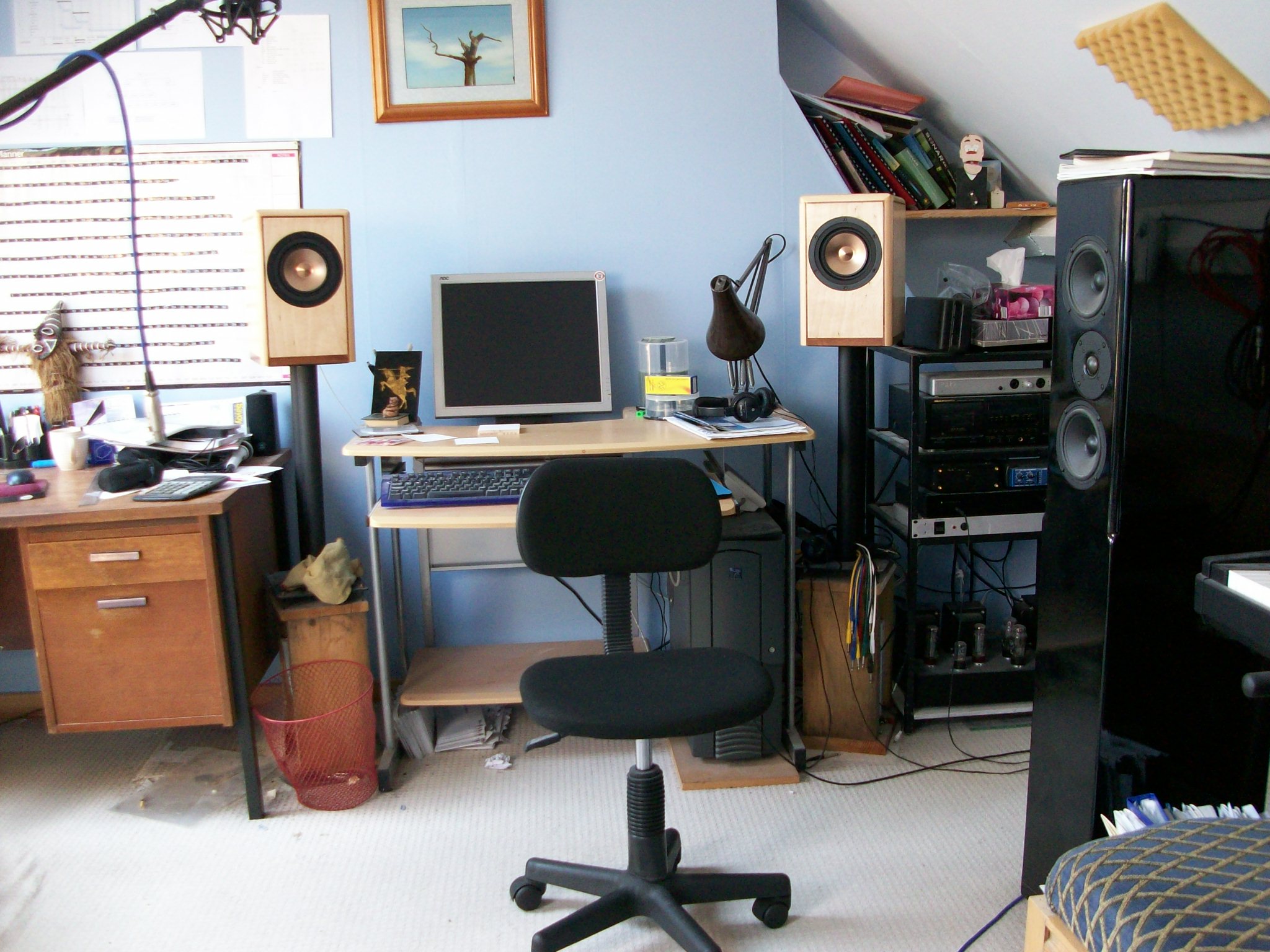
the markaudio range of speakers have proved to be very faithfull full(wide) range units. The setup shown here used an echo layla digital interface feeding a DAC AH Lite , itself connected to an EL34 single ended amplifier.
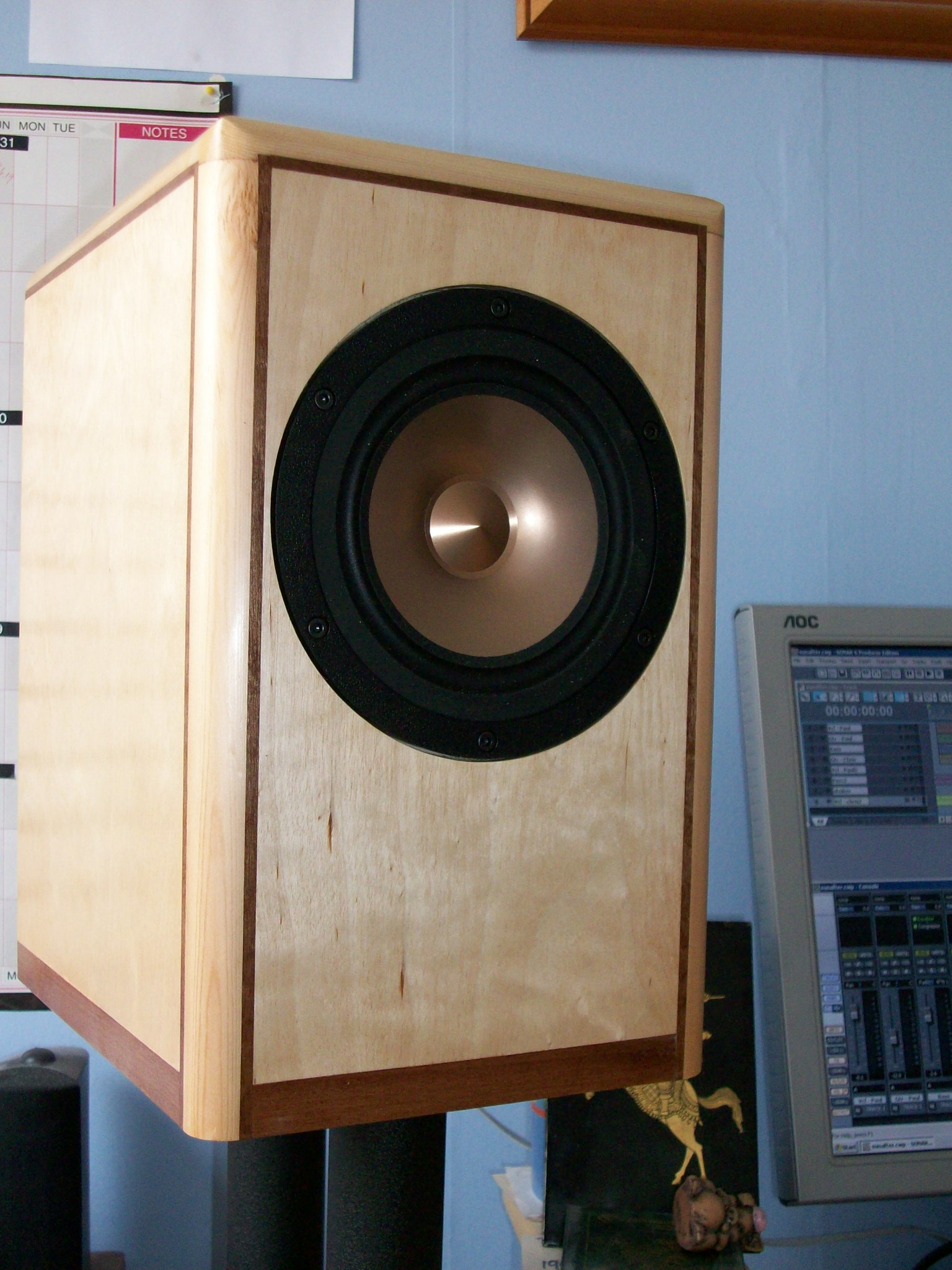
Used as a nearfield monitor in the studio this driver has proved exceptionally accurate and has not shown any deficiencies when compared with some very expensive purpose bought units.
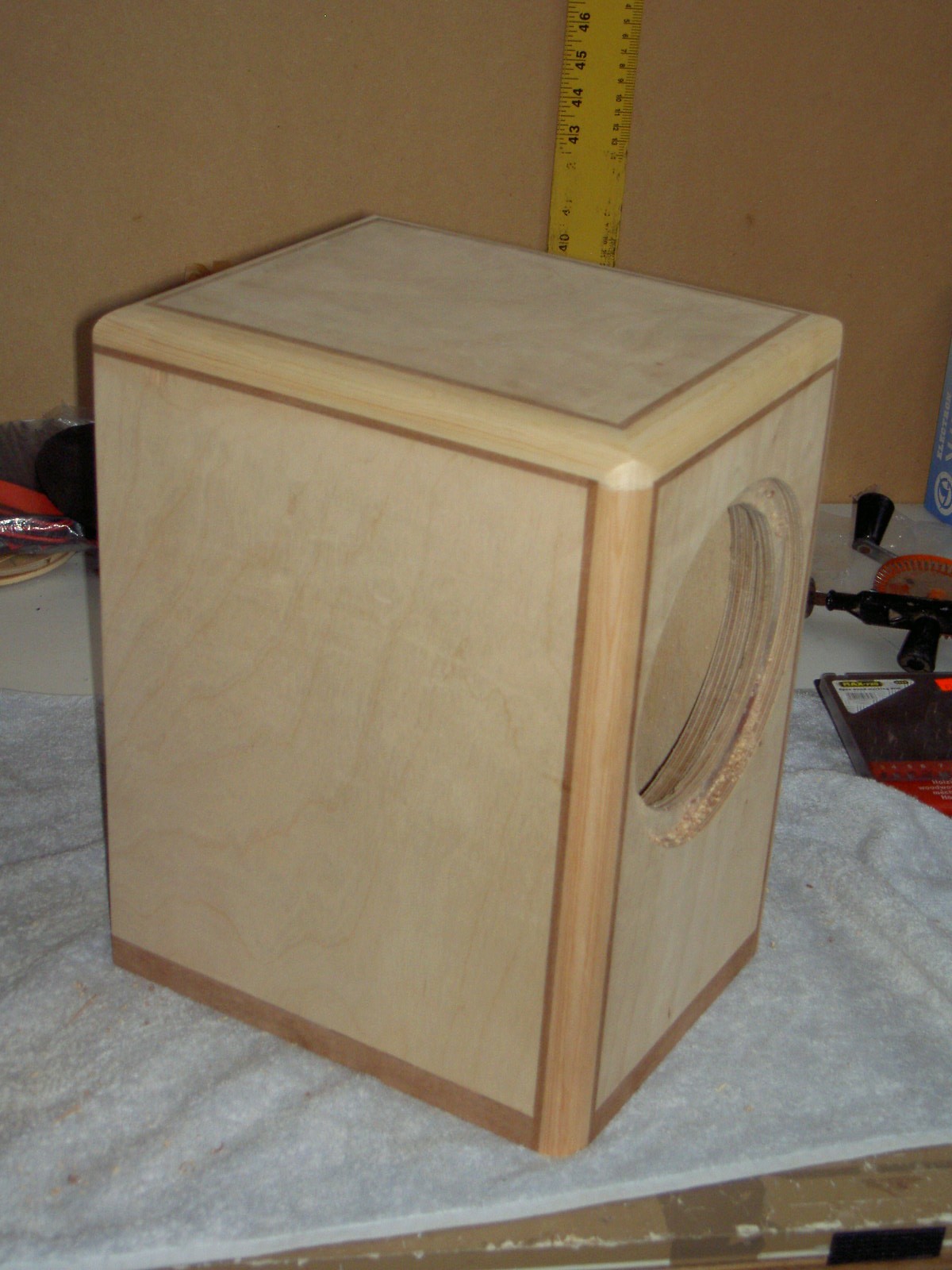
Initial build under construction
Version 2
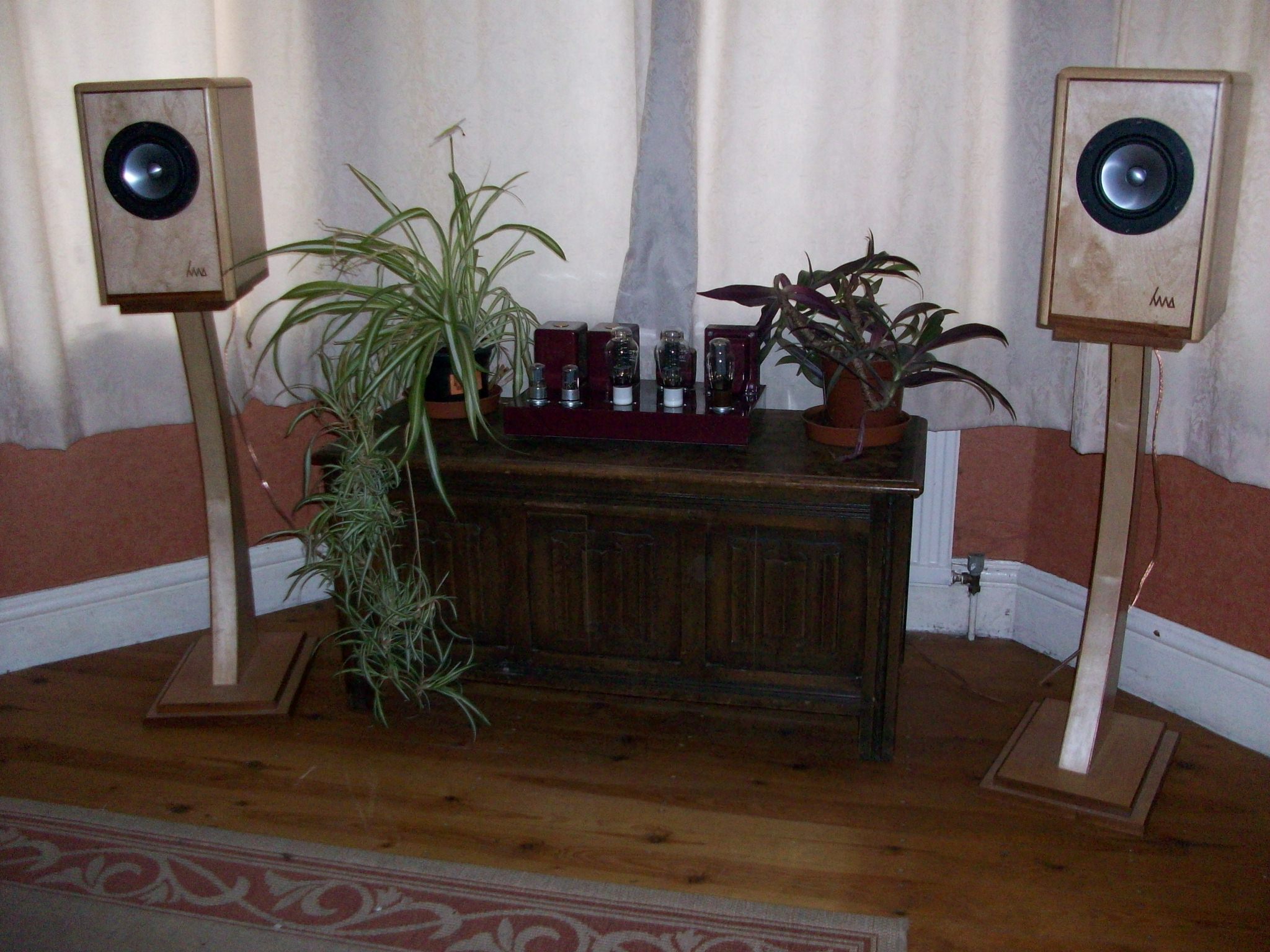
Shown here with a single ended 2A3 amplifier with an output of about 3.5 watts and a minimal damping factor, as found in most single ended valve amplifiers. The bass reflex cabinet has a Butterworth alignment, generally considered flat. The presentation proved very open and the stage was precise enough to locate any instrument in the mix(obviously dependent on the quality of the recording).
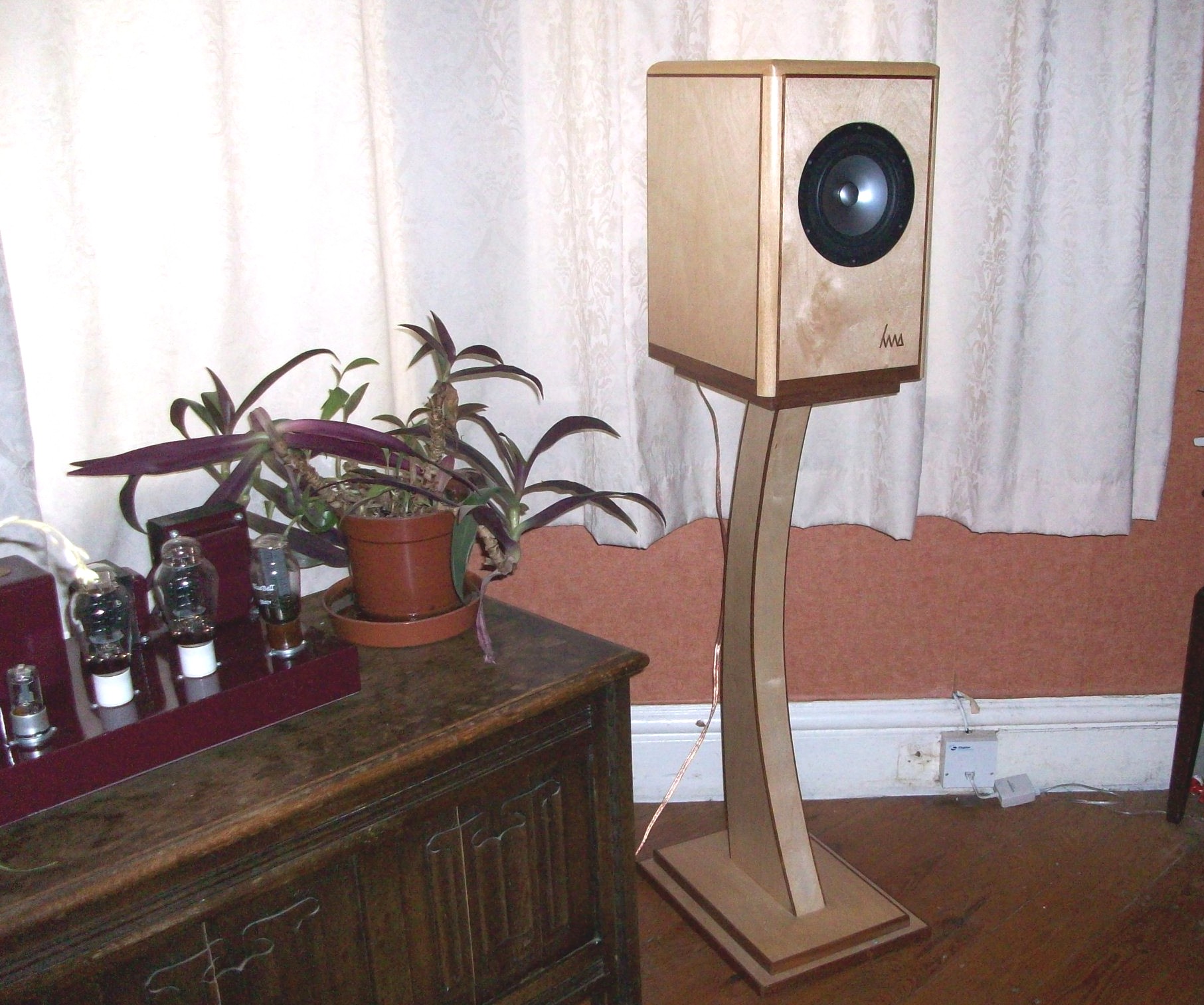
Version 2 used the later mark2 alpair 10. No difference was detected between this version of the driver and the previous version when used in the same cabinet.
Version 3
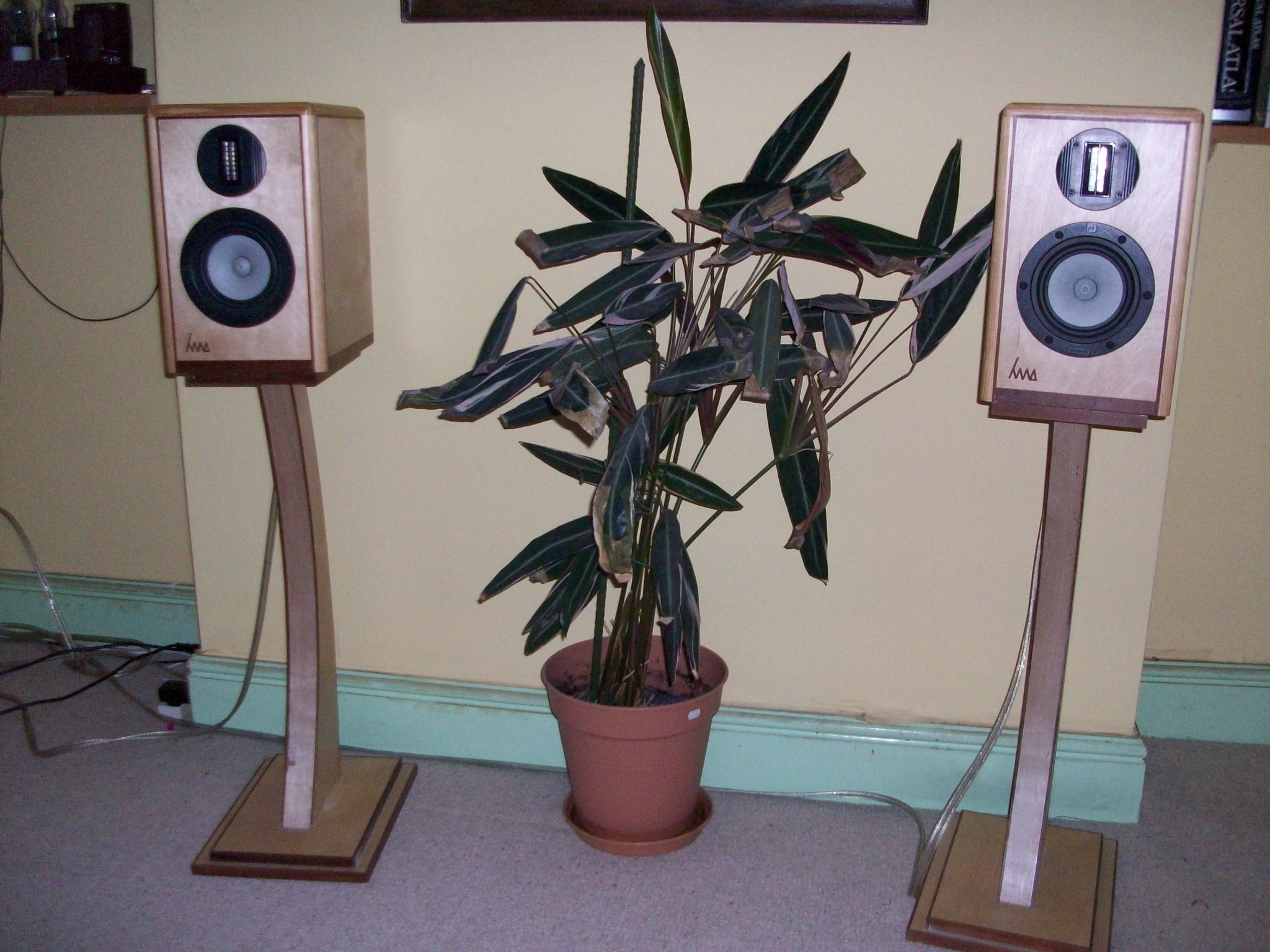
Differences in loading have been measured and recorded, but nothing more than generalisations have been reached. Experience has shown that some amplifiers , particularly single ended valve amplifiers , can have their bass response tidied to some extent by a cabinet that heavily loads the driver. However these findings are by no means exhaustive.
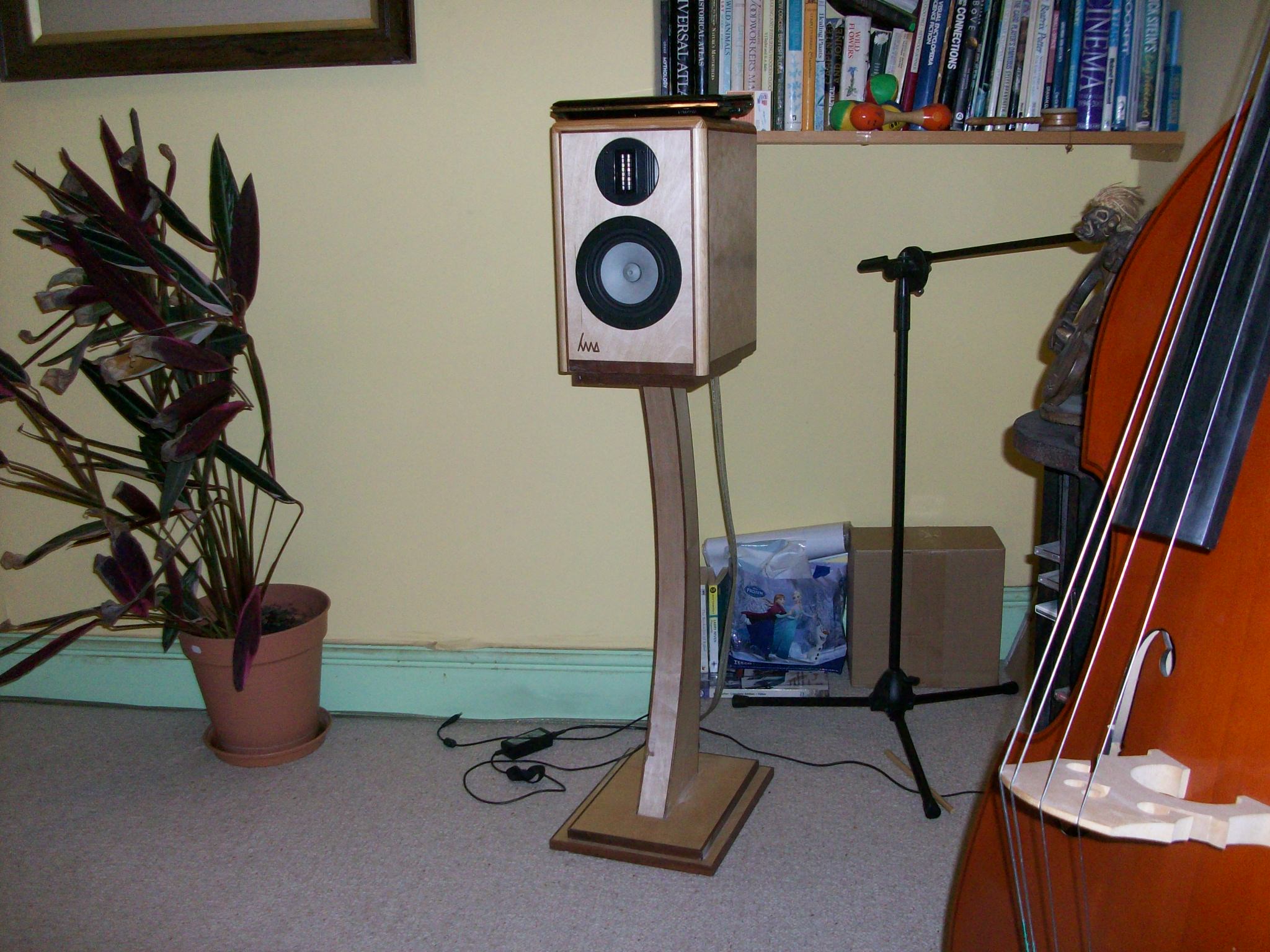
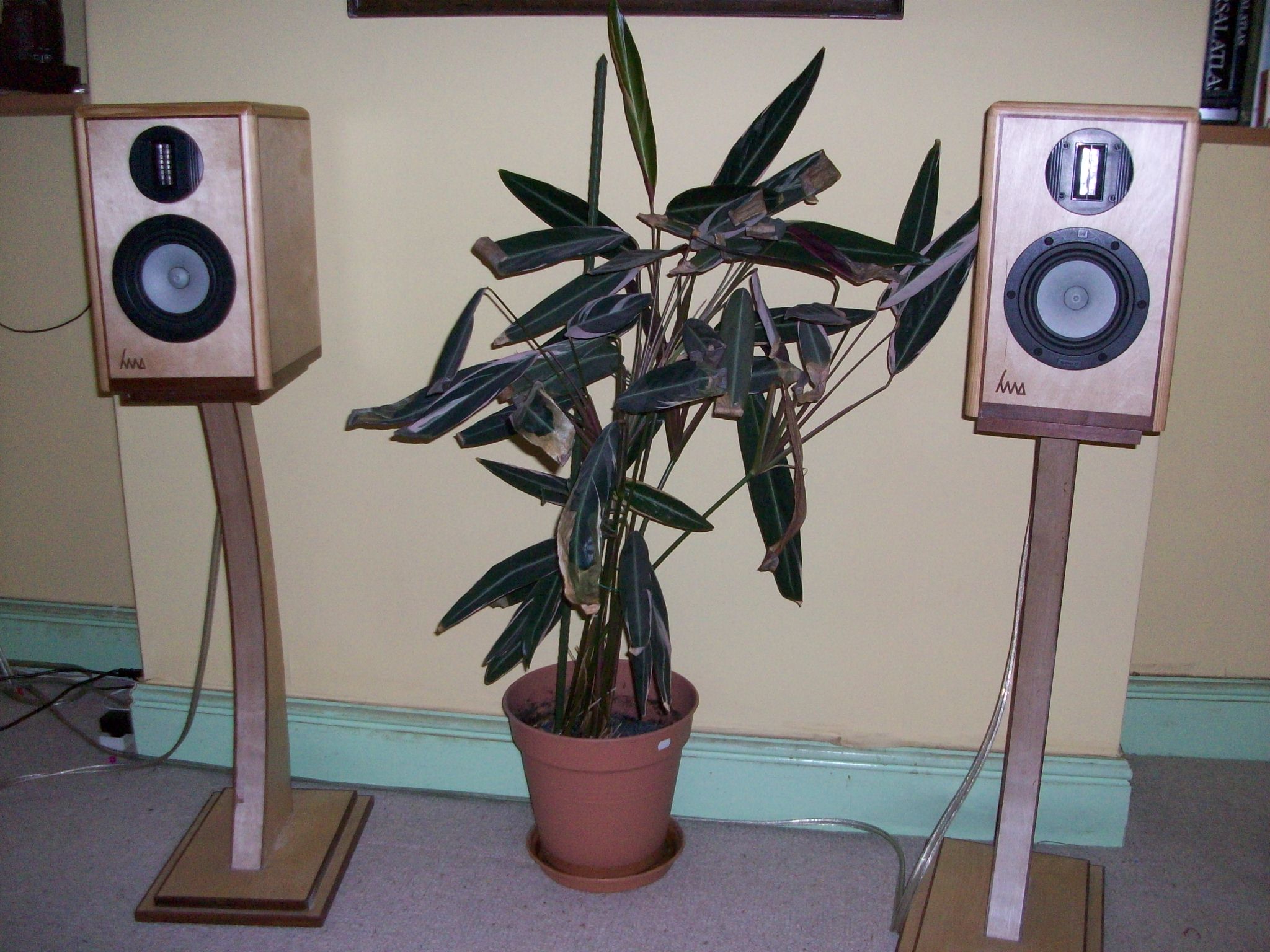
Version 3 is shown here using the later paper coned alpair 10. The introduction of a tweeter was hoped to bring a more rounded presentation. In the end this did not prove to be the case, possibly because the Monacor RBT95 ribbon tweeter was not the best unit to use, or possibly because it wanted more than a passive crossover.
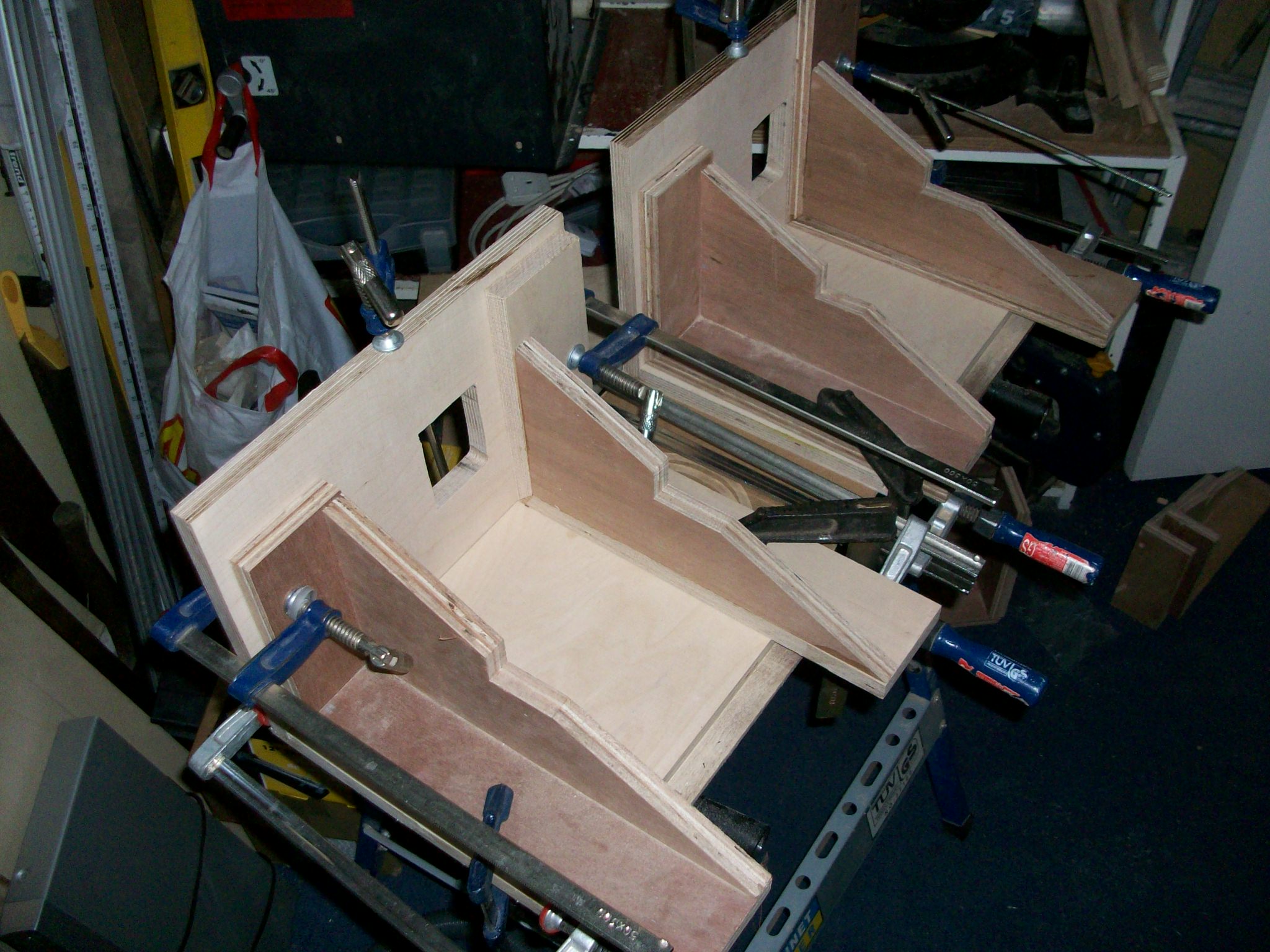
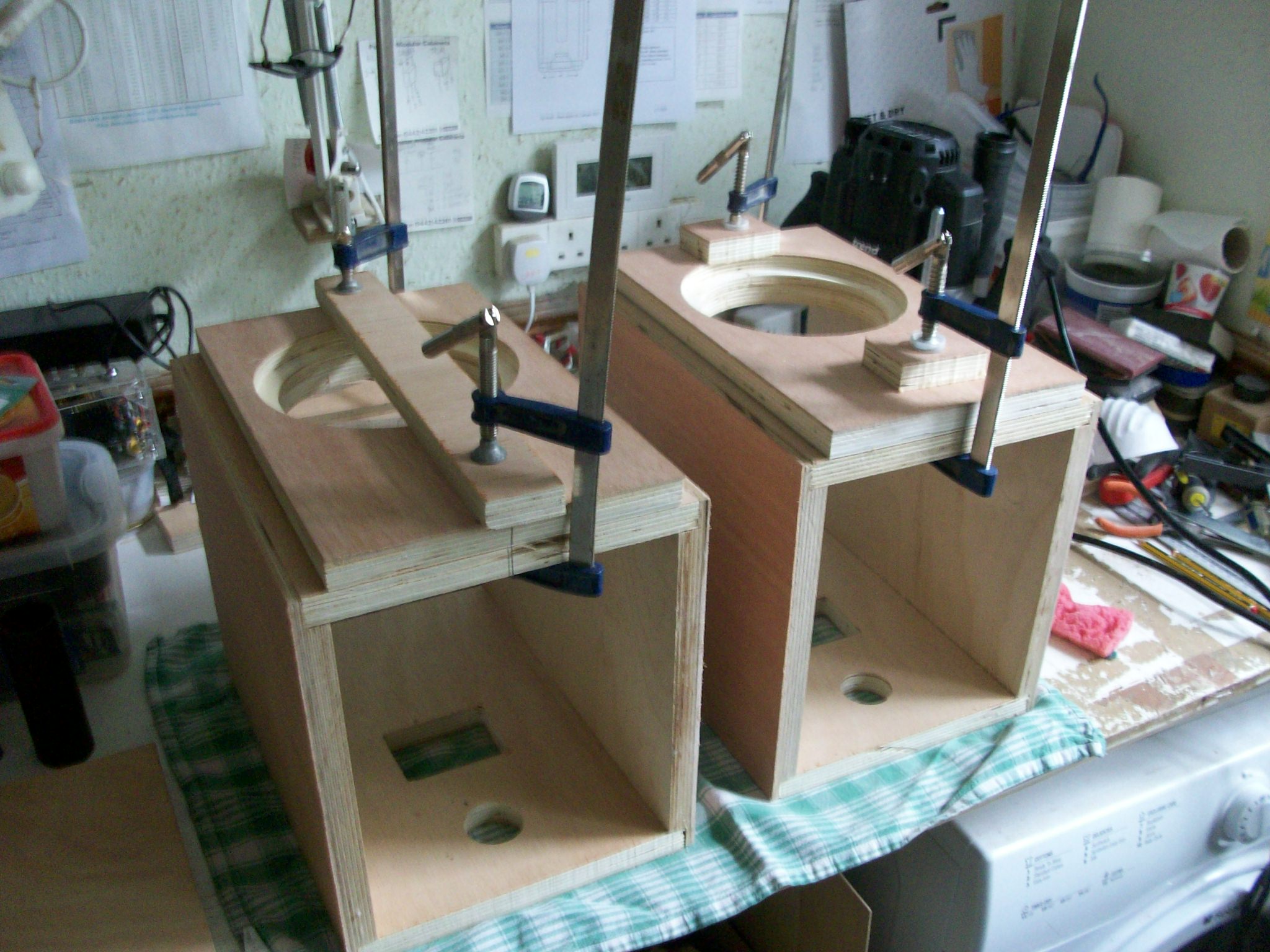
Version 3 under construction. The use of right angle jigs has proved invaluable in all the speaker builds shown on this site.
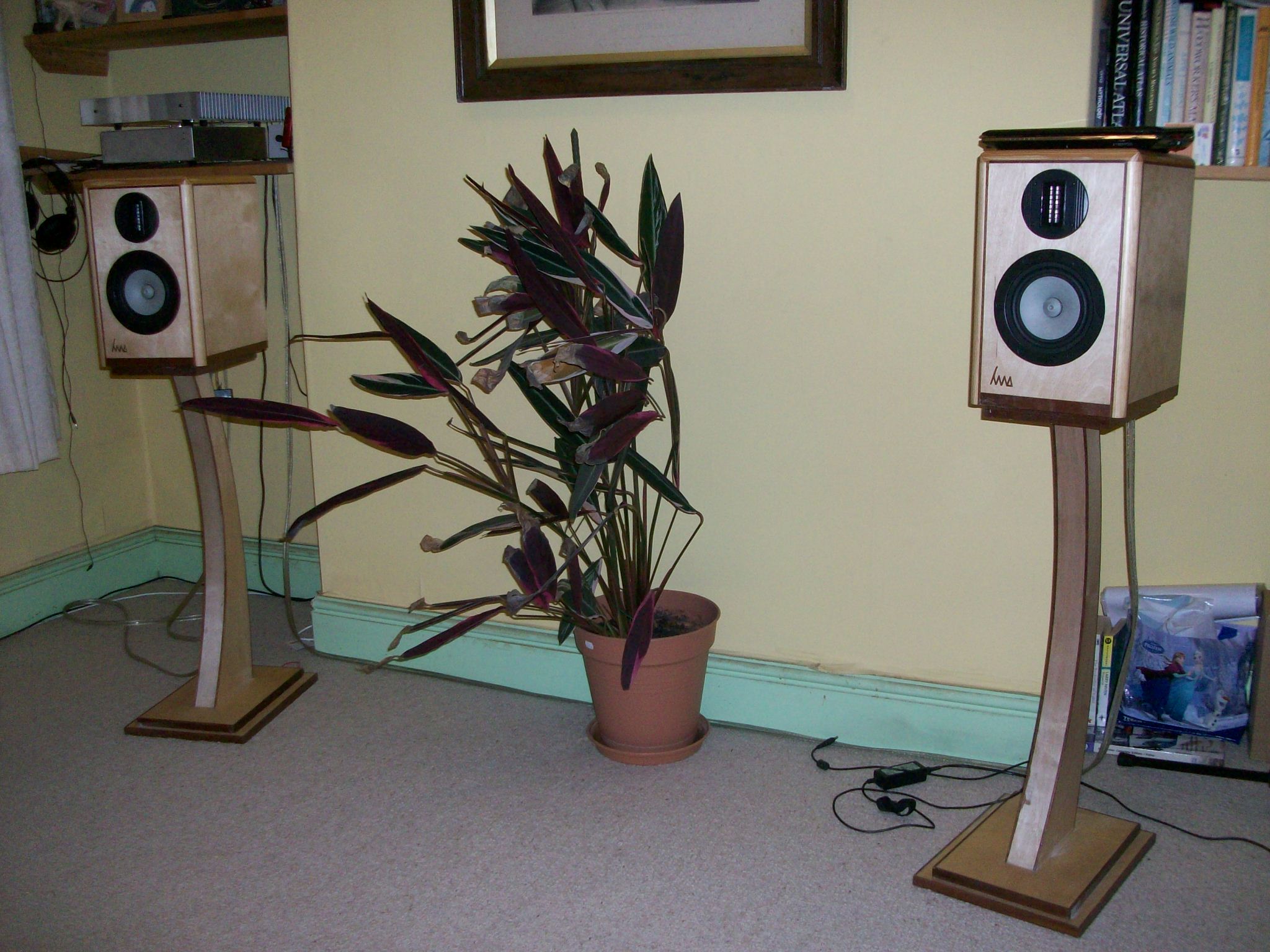
Version 3 driven by a lateral fet push pull amplifier of about 12 watts. The output impedance of this amplifier was considerably lower than any of the valve amplifiers, or the First Watt amplifiers used, and consequently the damping factor was higher. The bass presentation was thought to be very slightly more tuneful, but considering there were other changes involved, mainly in the power supply area, This is not considered conclusive.
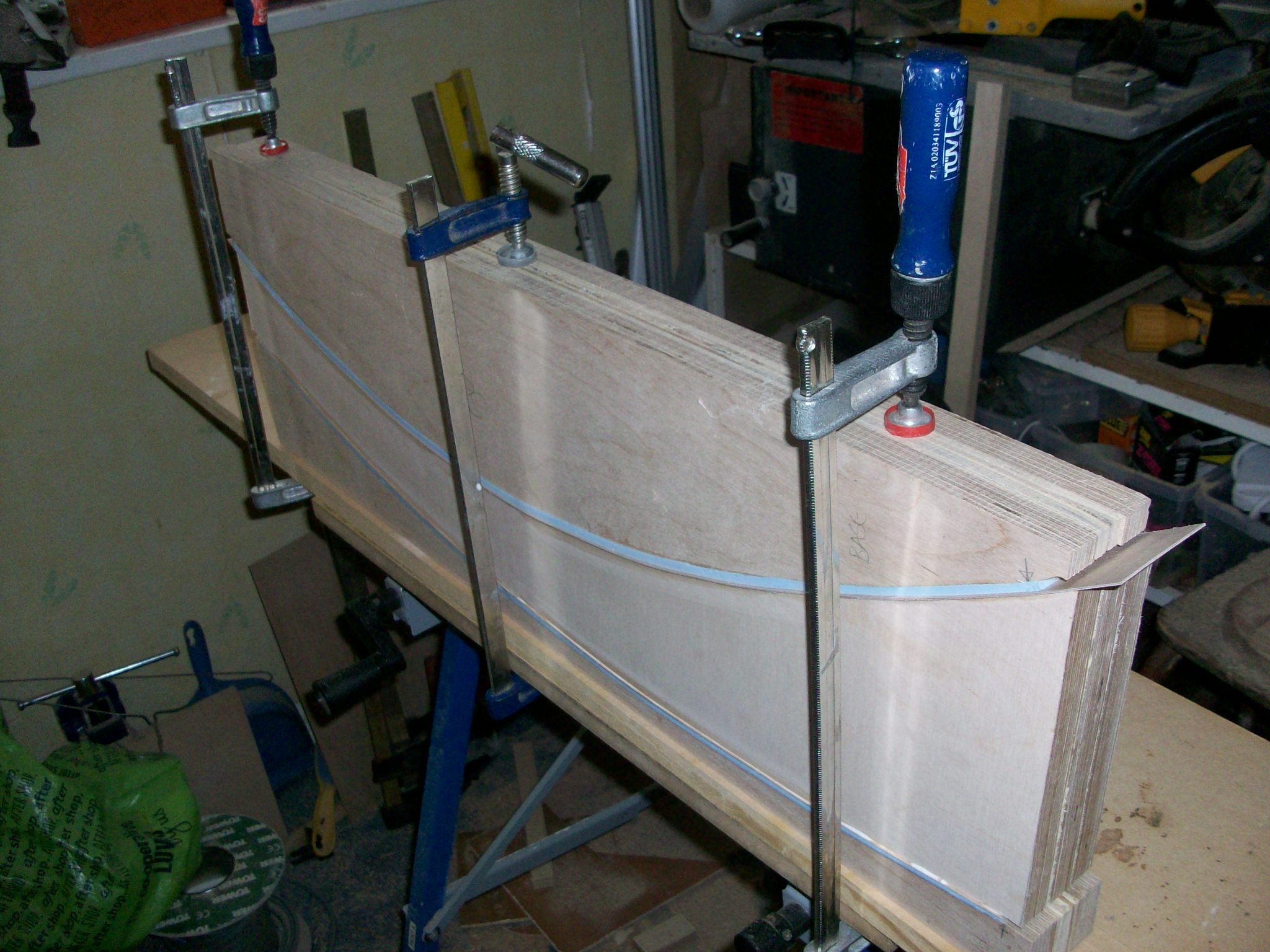
stand under construction
Version 4
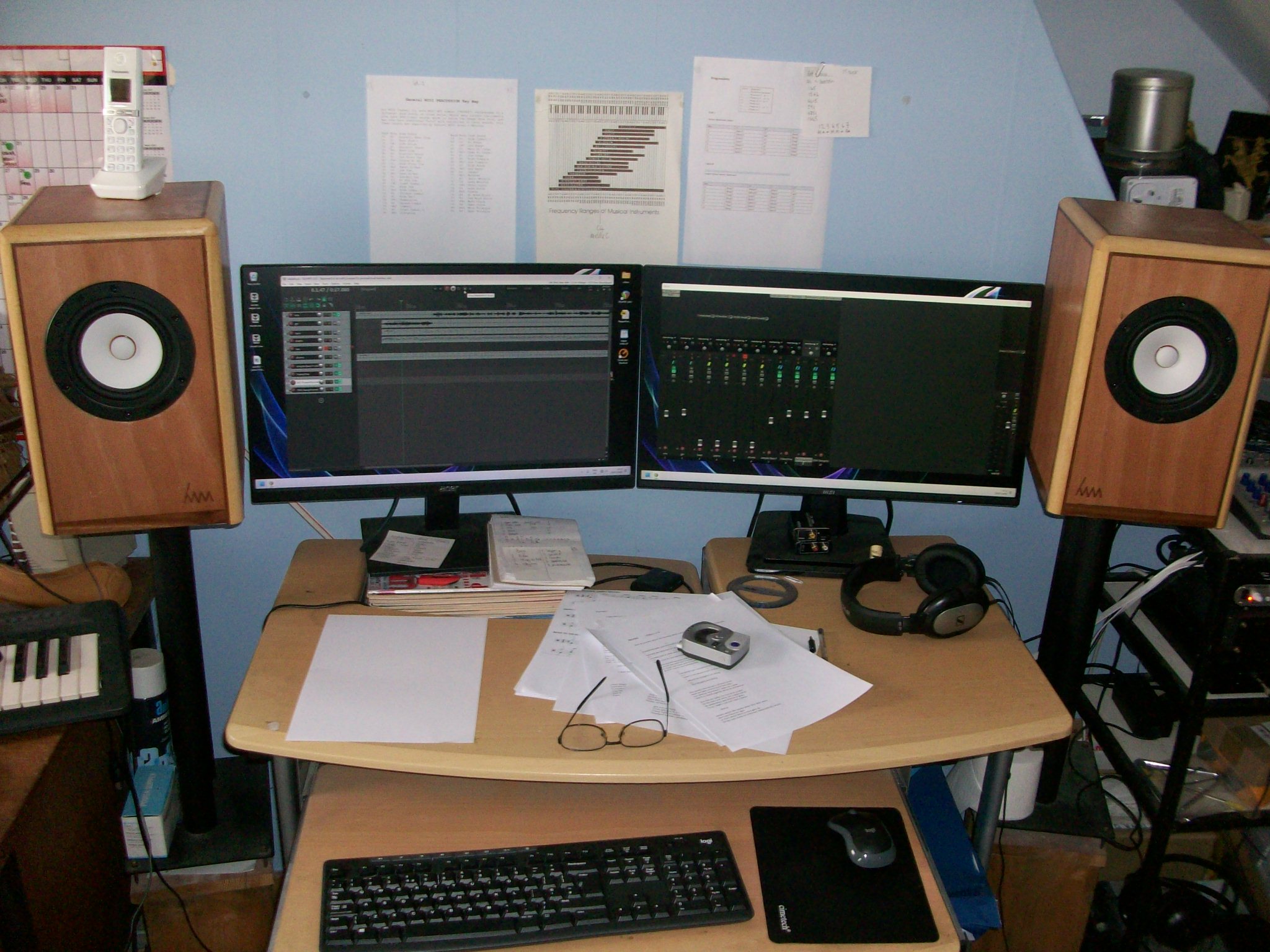
Version 4 with Markaudio MAOP10 in the project studio. Used as a nearfield monitor the presentation is as expected, revealing, accurate and honest. No limitations have been detected.
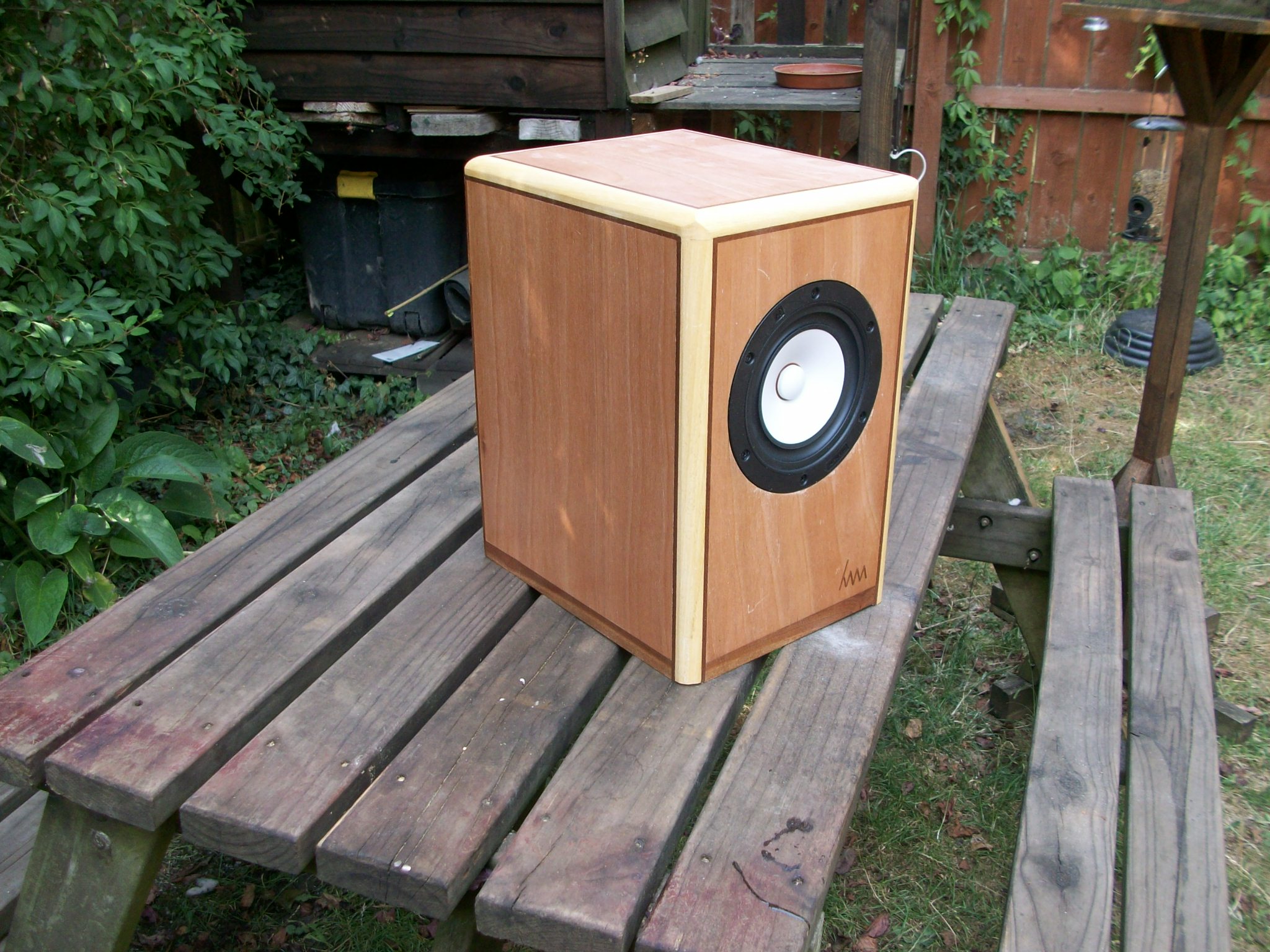
Version 4 in detail. 15 litres ported with no stuffing. Ebony cabinet with ash and mahogany trim, french polish and wax finish
Version 4 under construction. Build method used was identical to version 3, using the right angle jigs for precision.
I have a bit of history with monitors having progressed from Mackie through Tannoy to Markaudio. Without doubt these MAOP10s are the pinnacle of all the metrics I use to evaluate what I'm listening to. From the outset they demanded attention and it was very difficult to just listen to the music. The attention was hypnotised into focussing on the individual instruments, both realism and position in the stage.
In time I managed get lost in the big picture. It's a cliche but I managed to hear things in the mix that I'd never heard before, or been aware of. This, in tracks I thought I knew intimately. Awesome!.