

Spheres
In 1957 Harry Olson published 'Acoustical Engineering', an absolute bible for anyone serious about designing or building loudspeakers. This book was based on an earlier work of his from 1940 and contained, among many many other things, the results of experiments into the shape of loudspeaker enclosures. The following is an investigation into one of the shapes he considered: the sphere.
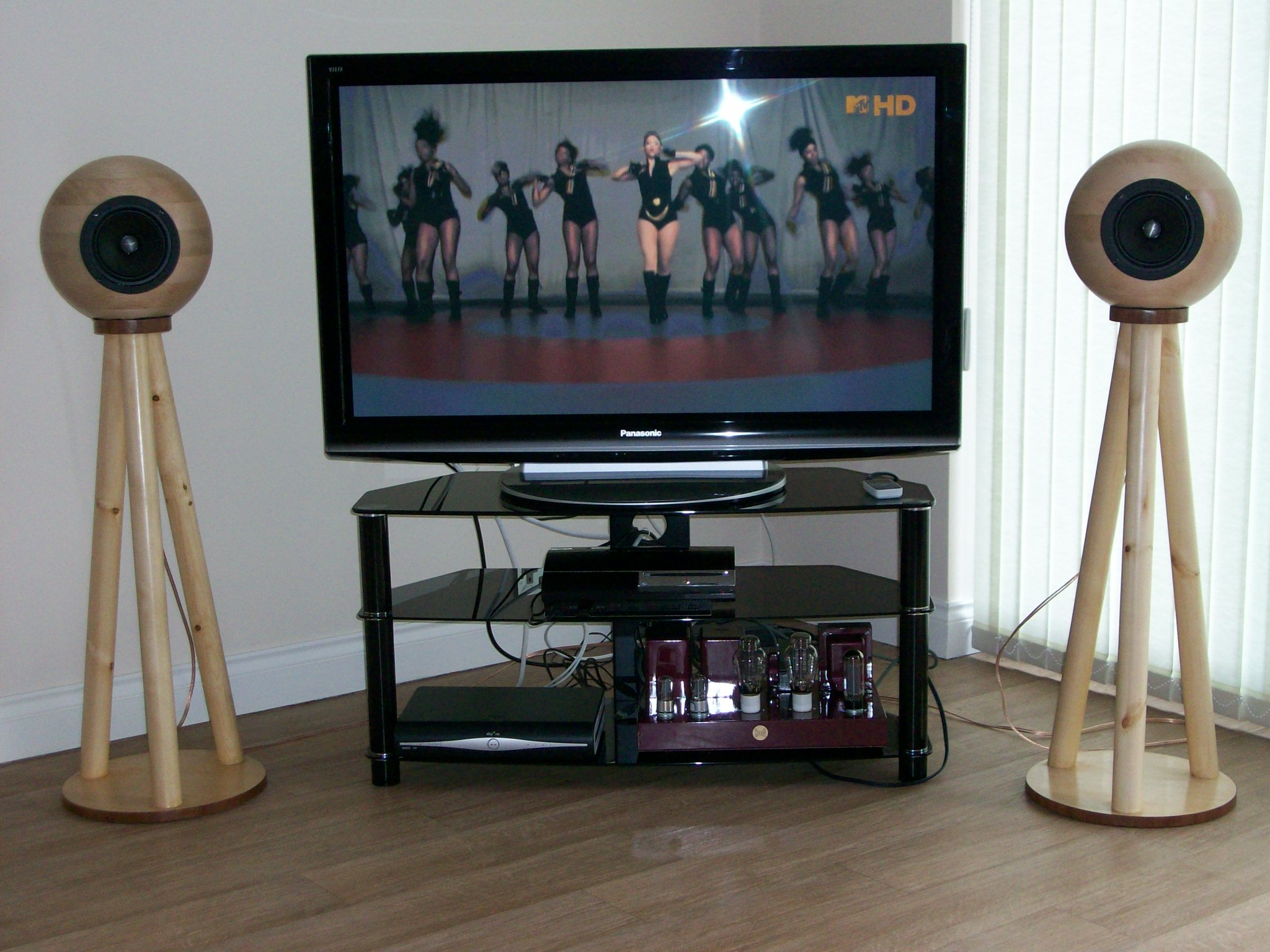
Click on any image to display in large detail.
Although entirely serious, this project was not immune to humour. From the outset it seemed obvious that the sphere with it's loudspeaker driver bore some resemblance to the martians depicted in the original 'war of the worlds' film. Hence the three legged approach.
The sphere with the easiest dimensions to work with was located in Ikea and was formed from two of their salad bowls. This gave a diameter of 11" and a volume of 9.2 litres. Using the Butterworth alignment formula 'Vb = Vas/((Qtc/Qts)^2-1)' a number of loudspeaker drivers were considered which had the required size and Vas figure. The chosen driver was the Tangband W5-1611 which closely fitted the requirements, and turned out to be a superb full range driver.
Building
Certain operations turned out to be a bit more than trivial. Firstly, the individual bowls need their rims turning perfectly flat to allow each bowl to be mated to it's partner. This is ideally performed on a lathe. Secondly, a box has to be constructed to hold one of the pair of bowls while the speaker hole is routed. This box has to fit the bowl exactly and also provide a completely flat surface for the router to operate.
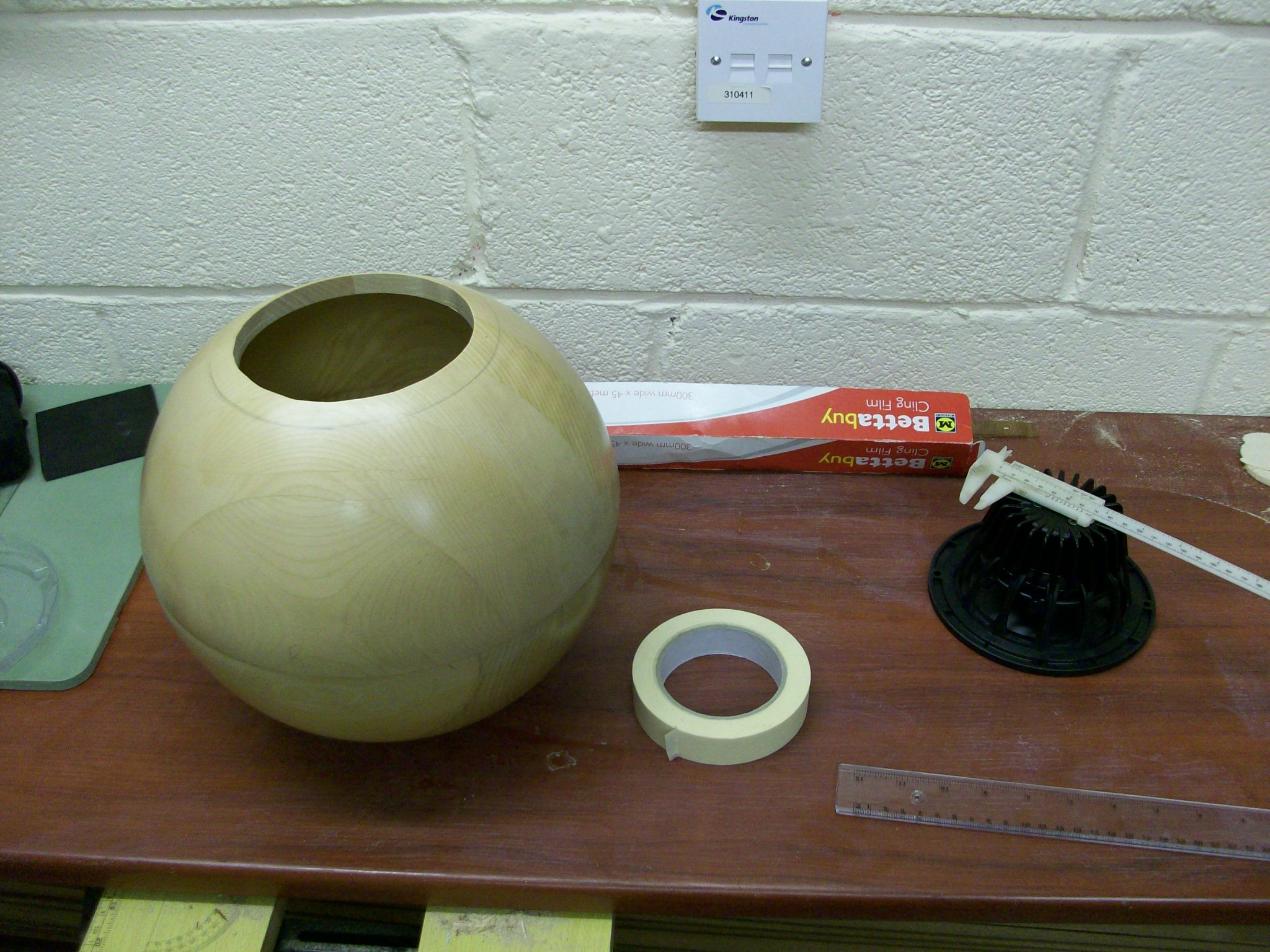
The two bowls mated after having their rims shaved flat and the hole routed for the driver..
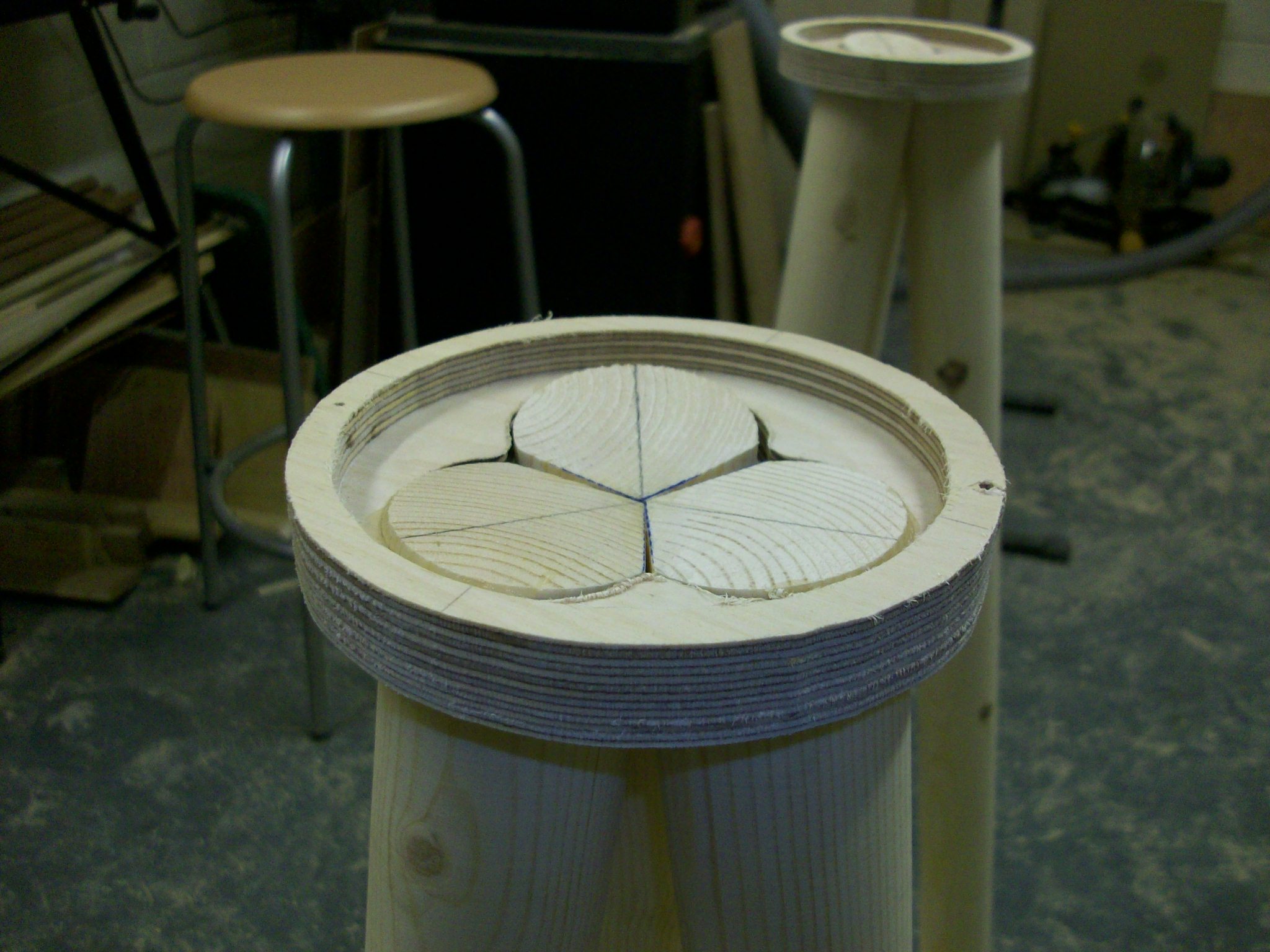
The tops of the legs shaped to fit inside a routed cup to support the bowls.
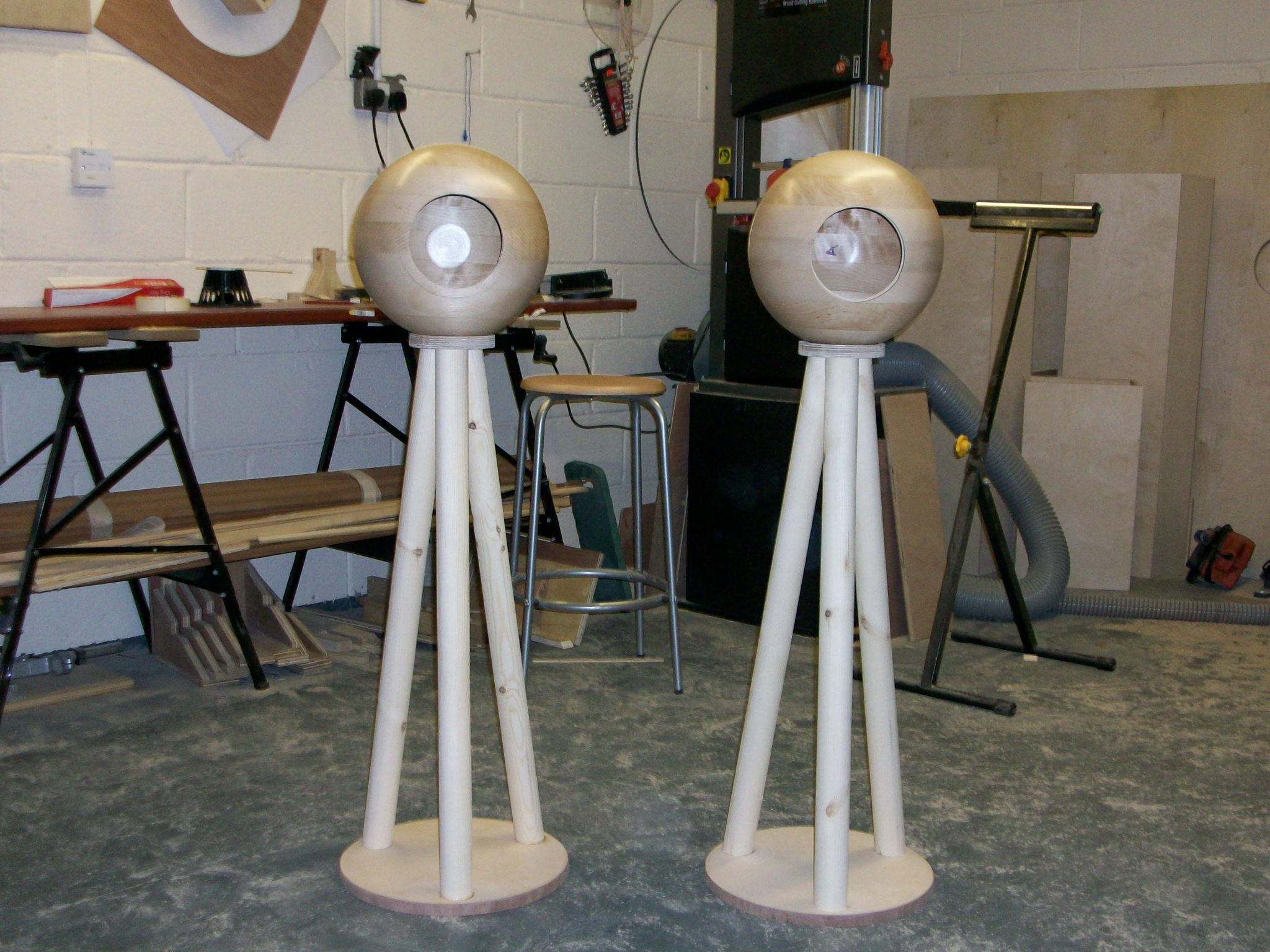
The assembled units awaiting drivers and the finishing mahogany strip applied to the seat.
Completing
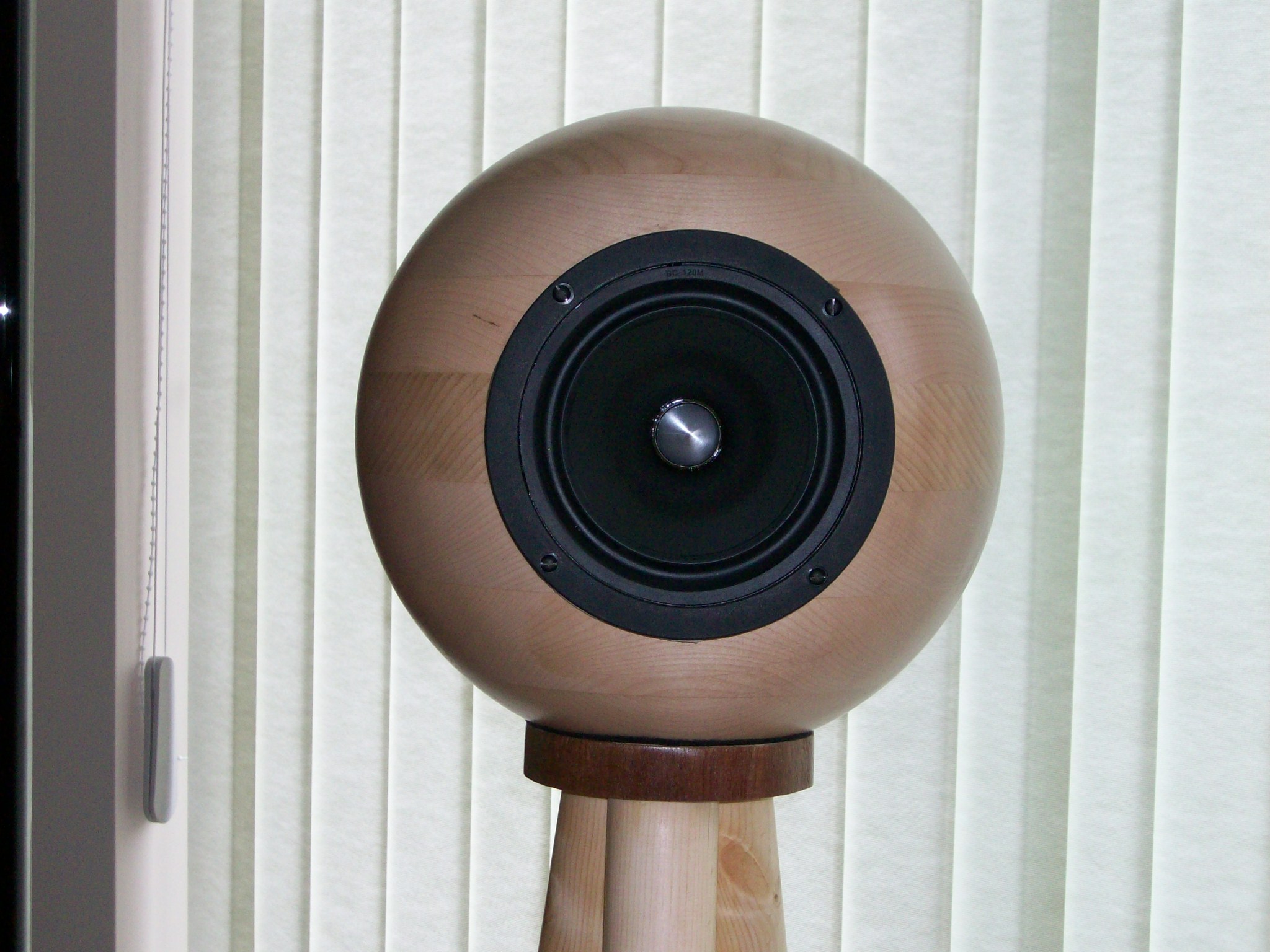
You are being watched.
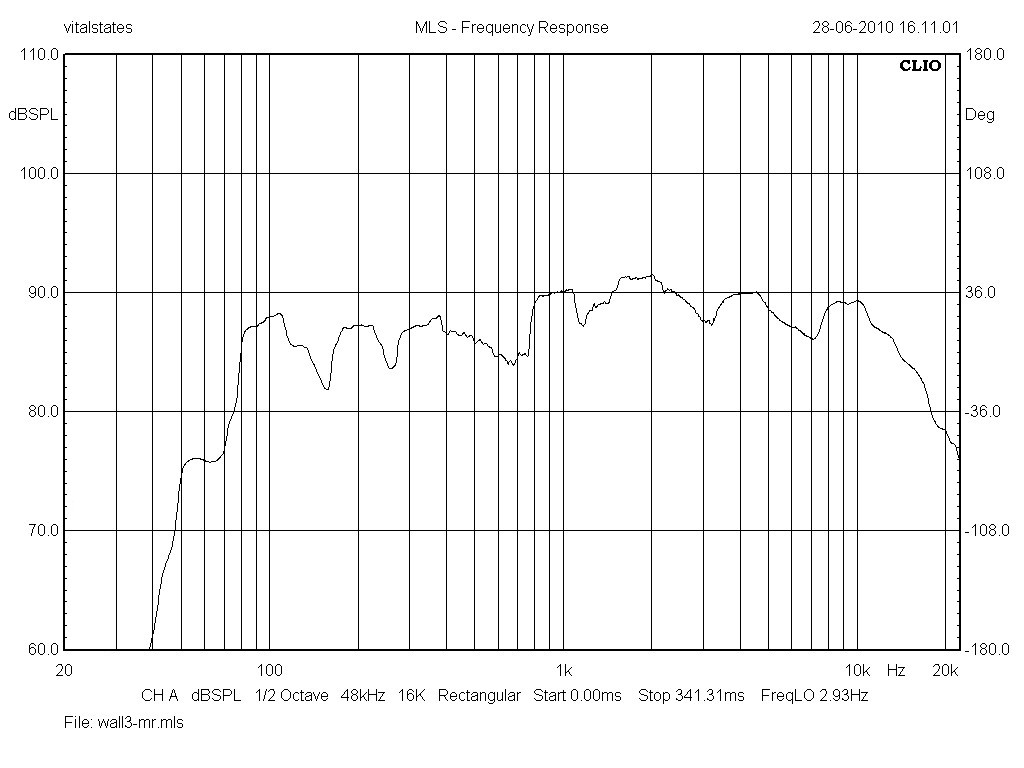
frequency response positioned against the wall in a furnished room.
The frequency response in free space was much the same but the range between 100 and 1000 htz was much flattened.
The proof of the pudding etc....these loudspeakers have proved quite spectacular in considering their size and cost. They do not come across as shy in any part of the frequency range and although the mls chart shows a marked decline at either extreme, this has not been apparent in listening tests. As predicted, the imaging is outstanding.